Recruitment is easy to underestimate until a business needs to fill dozens of roles at once. Actually, every vacancy brings its own demands, from finding suitable candidates and arranging interviews to negotiating offers and tracking results.
And, when these activities pile up, hiring can become difficult in order to manage and even harder to scale.
RPO recruitment provides businesses with the option to outsource part of or all of this process to a specialist provider. If you are already exploring talent acquisition solutions, RPO is one of the most structured options to consider. In this blog, we’ll explain how RPO works, explore its models and costs, and compare it with a traditional recruitment agency in order to help you determine which approach fits your hiring needs.
What Is RPO in Recruitment?
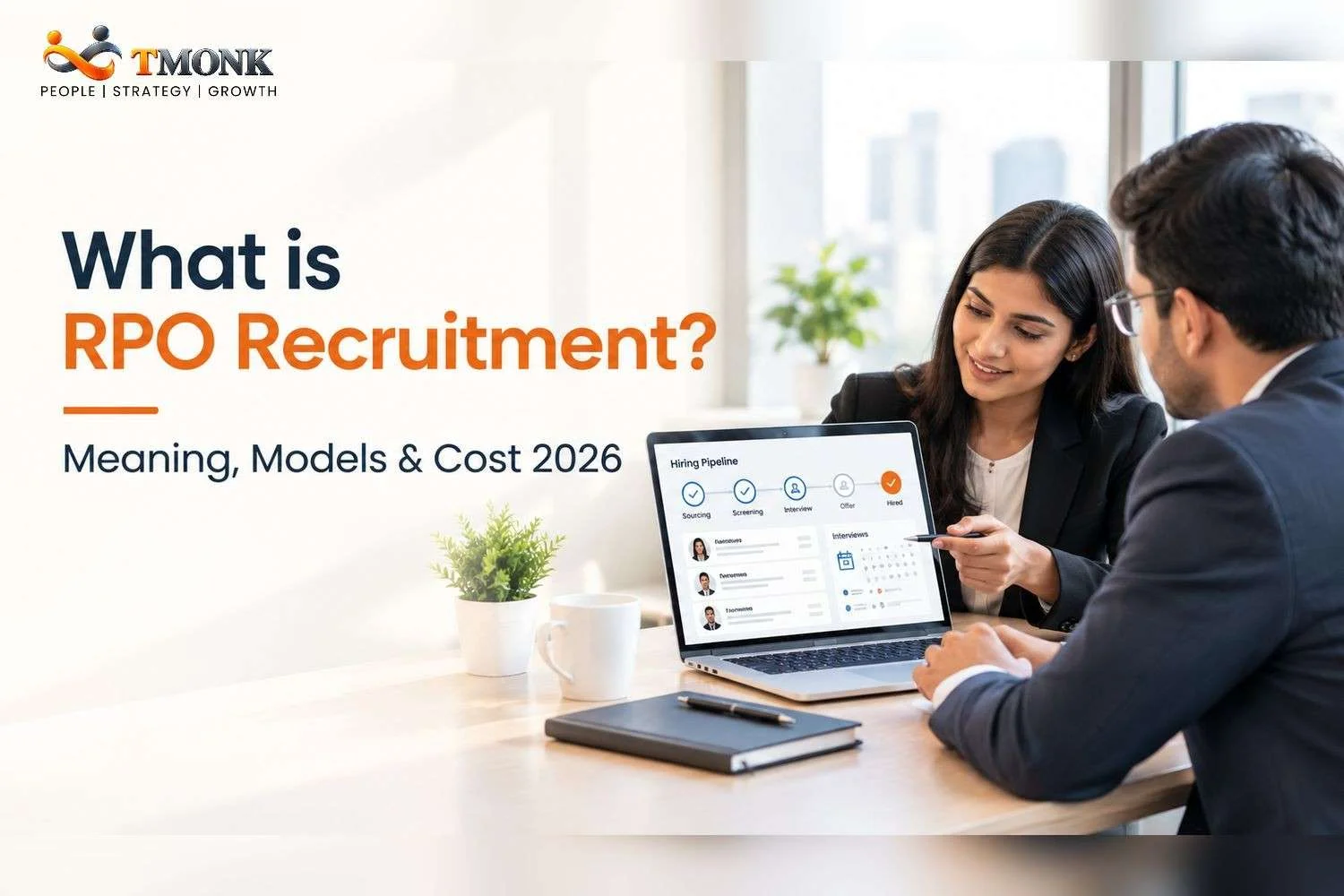
RPO in recruitment refers to Recruitment Process Outsourcing, which is a hiring approach where a company outsources a portion or the entirety of its recruitment process to a third party. This can involve finding candidates, screening, interview scheduling and execution, offer management, and reporting on the recruiting process.
An RPO provider will have recruitment expertise and abilities that you can make use of to supplement your internal team and will offer the flexibility of support as you evolve in your hiring needs. RPO is not solely about filling the role but is a process of managing the hiring process. A more structured recruitment process ensures that companies can effectively manage the budgets, hiring needs and the final selection.
How Does RPO Work?
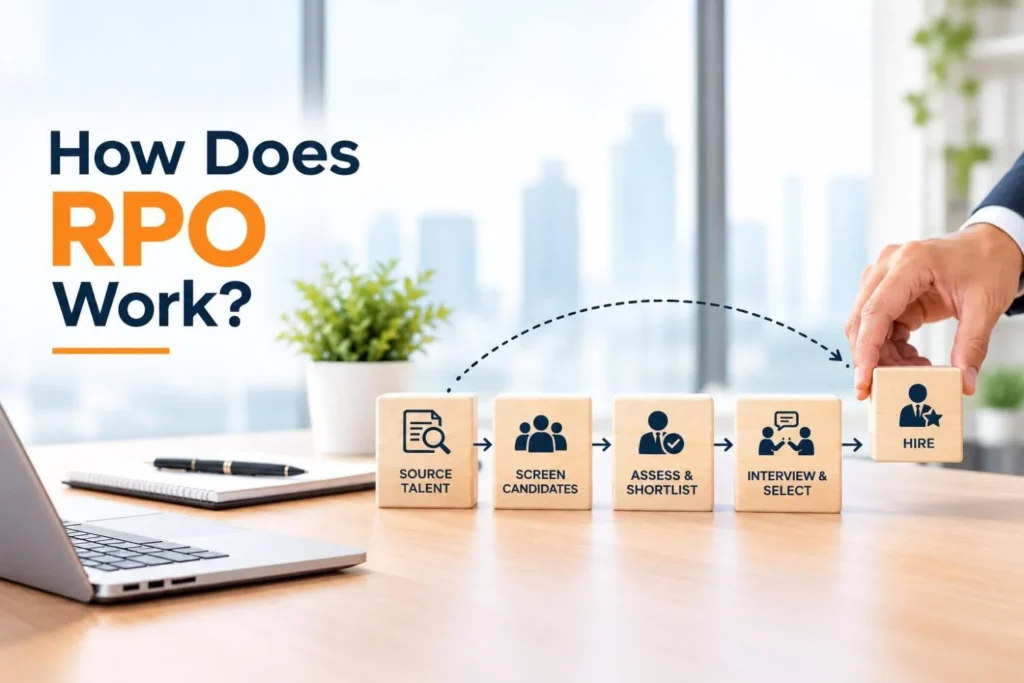
RPO works by aligning recruitment activities with a company’s hiring goals, budget, and workforce needs. A provider manages the agreed stages of recruitment, helping the business maintain a consistent process as vacancies increase or priorities change.
- Needs analysis and hiring plan: The provider reviews upcoming vacancies, timelines, budgets, and skill requirements to establish clear hiring priorities.
- Candidate sourcing: Recruiters identify suitable applicants through job portals, professional networks, referrals, and direct outreach.
- Screening and interviews: Candidates are assessed against role requirements, and interviews are coordinated with hiring managers.
- Offer and negotiation support: The provider helps communicate offers, address salary expectations, and reduce candidate dropouts.
- Onboarding: Depending on the agreement, the provider coordinates pre-joining communication and documentation.
- Performance reporting: Metrics such as time-to-hire, cost per hire, and offer acceptance rates help measure the effectiveness of RPO recruitment and identify areas for improvement.
The goal is not simply to fill vacancies faster. It’s to understand where hiring slows down and make the process more effective over time.
Types of RPO Recruitment Models
Not every business needs the same level of recruitment support. Some need help filling a large number of vacancies quickly, while others require ongoing hiring support or assistance with specific roles. The following types of RPO services offer different ways to match recruitment needs with available resources.
End-to-End RPO
The provider oversees the entire recruitment process, including the planning of the workforce, source of candidates, scheduling interviews, and reporting of the process. It is appropriate for companies that are constantly recruiting employees.
Project RPO
This model is best suited for time-sensitive hiring goals, such as opening a new branch, scaling up, or staffing for a product launch.
On-Demand (Selective) RPO
The provider is providing a limited service that is what they are best suited to, for example, sourcing and screening; the in-house team handles the rest.
Hybrid RPO
The internal HR team and external provider work together in a shared recruitment process, sharing company knowledge and supplying the necessary resources and expertise to supplement the team.
RPO vs Recruitment Agency
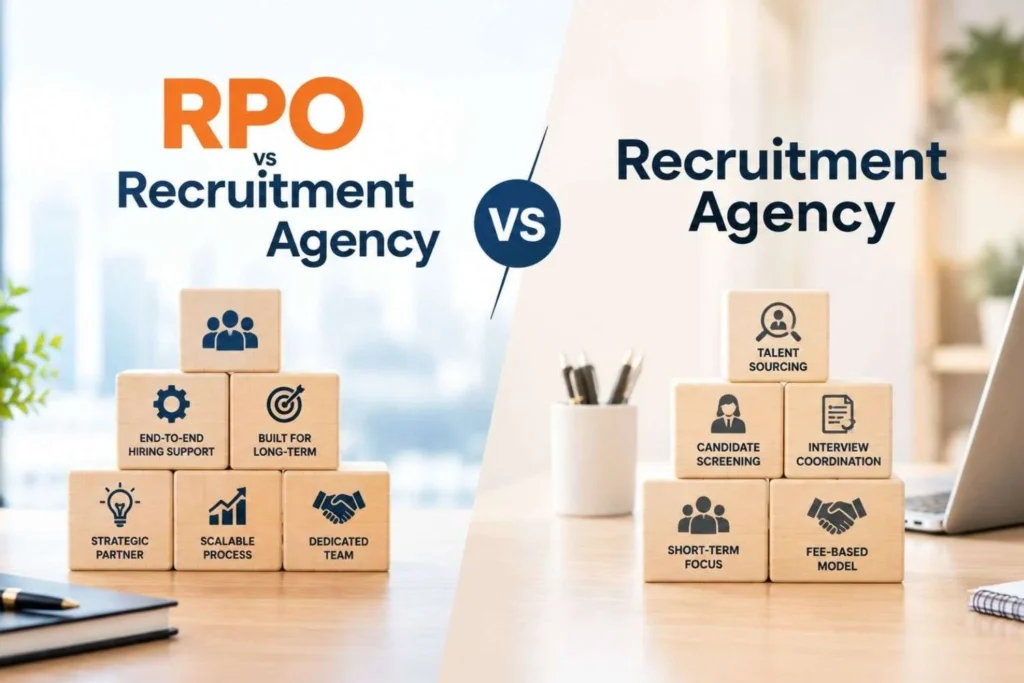
The difference between RPO and a recruitment agency comes down to what you need help with. The difference between RPO outsourcing and a recruitment agency is that the agency works to fill in a specific vacancy and RPO works on managing part or all of the recruitment process.
Both options are not necessarily better; which one to choose will depend on the number of hires you do, the resources you have on hand, and your business objectives. If you are also hiring for senior leadership roles, it helps to understand the executive search company vs recruitment agency difference before you decide.
Basis | RPO | Recruitment Agency |
Scope | Manages part or all of recruitment | Fills specific vacancies |
Engagement | Often an ongoing partnership | Usually vacancy-based |
Best for | High-volume, recurring hiring | Urgent or specialised roles |
Pricing | Retainer, management fee, or hybrid | Often a percentage of annual CTC per hire |
Reporting | Hiring metrics and process performance | Candidate shortlists and placement updates |
If your business hires continuously, RPO can bring consistency to the process. For occasional vacancies, a recruitment agency may be the more practical option.
Benefits of RPO in Recruitment
RPO isn’t just about increased recruiters. It’s having a process for hiring that can meet the needs of the business, without the delays or expenses. The proper RPO services can assist businesses:
- Minimize hiring time and expenses: Streamlined processes and strategic sourcing can help to cut down on unnecessary hiring delays and expenses.
- Scale recruitment easily: Grow and scale back as needed.
- Improve hiring decisions: Recruitment information uncovers issues, sources performance and offer acceptance details.
- Enable internal HR teams: Free up internal HR teams to spend more time on workforce planning, employee development and retention, and less on day-to-day recruitment. This lets HR focus on strategic human resource management instead of routine hiring tasks.
These benefits depend on clear hiring targets, effective communication, and regular performance reviews.
When Should You Choose RPO?
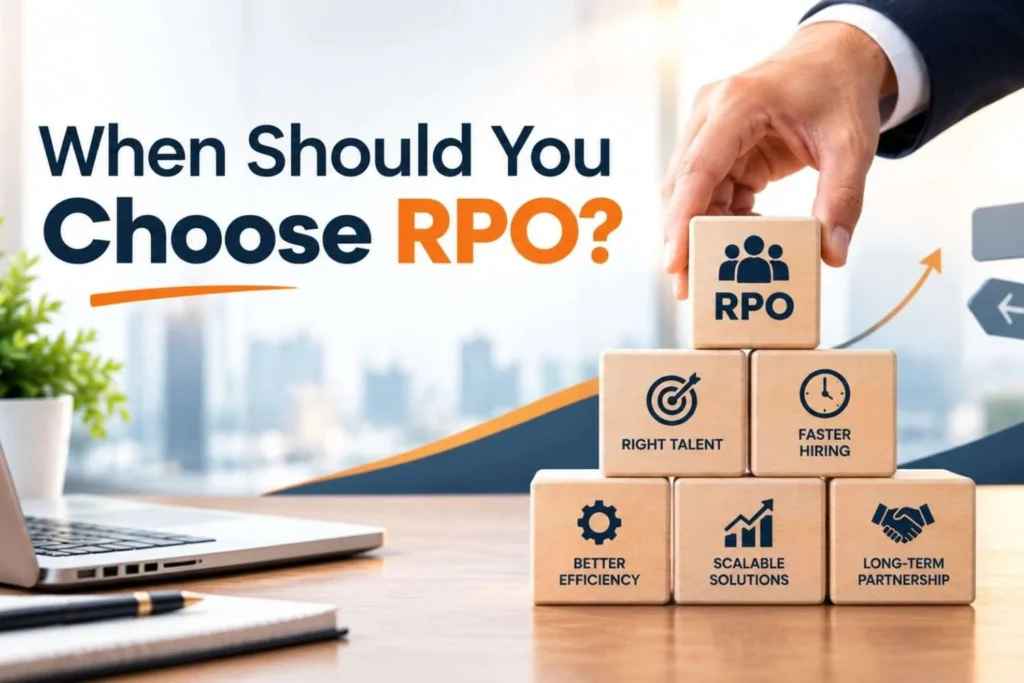
RPO is good when recruitment becomes a recurring business challenge instead of an occasional HT task. If your internal team struggles to keep hiring on schedule, it can be time in order to consider more structured approach.
Consider RPO recruitment if your business:
- Hires continuously or in large volumes:
You need a consistent pipeline of qualified candidates across multiple roles.
- Takes too long to fill vacancies:
Delays in sourcing, screening, or even interview coordination affect business operations.
- Faces rising hiring costs:
Repeated agency fees and inefficient recruitment processes are stretching your budget.
- Plans to expand:
Opening a new office or launching a business line requires additional hiring capacity.
- Needs measurable results:
You want clear data on time-to-hire, cost per hire, and candidate conversion, not just a stack of resumes.
Before you shortlist a provider, go through the questions to ask before hiring a talent acquisition company so you can compare your options with confidence.
Conclusion
The best recruitment is when it’s part of a business. RPO recruitment offers businesses a way to structure recurring recruitment, control recruitment expenses and make informed decisions based on measurable results.
The choice of the right model depends on your hiring needs, internal resources and future plans. If you are considering outsourcing, determine the areas of your existing process that need improvement and what you hope to achieve by outsourcing.
Explore T Monk’s talent acquisition expertise to find a recruitment approach that fits your workforce needs and business priorities.